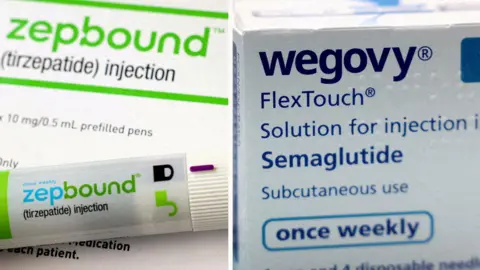
US President President Trump has disclosed deals aimed at reduce the price of in-demand obesity drugs, as pharmaceutical prices emerge as a priority in his government's narrative about accessibility.
Major Agreements with Drug Firms
Addressing the public alongside drug officials at the presidential residence, the President announced deals with the pharmaceutical company and the drug manufacturer. Individuals are set to pay between $245 to $350 monthly for obesity medications like Novo Nordisk's drug and Zepbound.
Numerous GLP-1 drugs, employed against diabetes and obesity, cost more than $1,000 a month lacking coverage or savings.
Enhanced Access to Public Health Programs
The deals will enhance Eli Lilly's and the manufacturer's access to the federal health program and the state-federal health plan, the public healthcare plans for elderly and economically disadvantaged citizens.
Eli Lilly also announced in a statement it would be exempt from import duties for a three-year period as part of the deal with the federal government.
Pricing Breakdown
Approximately 10% of federal health program enrollees will be able for expanded access to glucagon-like peptide-1 treatments, and will be charged just $50, according to senior government leaders.
Individuals covered by Medicaid will see a staggered beginning depending on when state governments opt in to participate.
TrumpRx Website Roll-out
The weight-loss medications will be sold at reduced prices on the consumer-direct TrumpRx, a government-run site planned to launch by next month.
Via the government website, Novo Nordisk's drug and Zepbound will be priced initially at $350 each month typically, and fall to $250 in two years. The federal health program rates of Ozempic, the weight-loss medication, Eli Lilly's treatment, and the obesity drug will be $245.
Further Medication Options
Along with Novo Nordisk's Wegovy, the pharmaceutical firm's weight-loss oral medication, orforglipron, will be offered for $149 for the starting amount, the manufacturer said in a announcement. The firm's weight-loss medication will cost $299 for a initial amount.
The rates are contingent upon FDA approval of the medications.
Insurance Challenges
Glucagon-like peptide-1 medications are commonly not covered by private insurance. US legislation bans Medicare from covering the drugs when used for weight loss, although they usually are included when used to treat diabetes and heart conditions. Merely 13 states offer insurance under Medicaid for slimming reasons.
Health Secretary's Statement
Health Secretary the administration official, making remarks at the presidential residence, declared the deals were outcomes of months of talks with the pharmaceutical company and the drug manufacturer. He called excess weight "the main cause of long-term illness" in the America.
"It will be a lifesaver to patients," the Health Secretary stated.
"It's not a cure-all, it's not a quick fix," he noted, highlighting the value of eating habit modifications and physical exercise.
Context of Drug Cost Efforts
Since July, Trump has been urging drug companies to reduce prescription rates. He dispatched messages to seventeen pharmaceutical firms in the recent season, giving them two months to reply to his demands for reduced prices.
Pfizer was the primary large medication manufacturer to secure a deal with the administration, cutting costs for selected medicines by as much as eighty-five percent on the federal portal. Pfizer also agreed to lower treatment costs for Medicaid.
AstraZeneca and EMD Serono have additionally secured deals with the government in the last month.


